



Estonian good practices supporting the development of the Hungarian Active School programme – HSSF Team on a Study Visit
In autumn 2025, three experts from the Hungarian School Sport Federation (HSSF) took part in a study visit to Tartu, Estonia, where they had the opportunity to learn about the nationwide initiative called Schools in Motion, which shares a similar approach to the Hungarian Active School programme. The aim of the visit was to explore good practices, training solutions and mindset-shaping elements that may contribute to the further development of the Hungarian Active School programme.
Experiences from a nationwide programme
Launched in 2016, the Schools in Motion programme is currently implemented in approximately 222 Estonian schools, covering nearly half of all schools in the country. Since May 2024, the programme has been funded by the Estonian Ministry of Education and Research. Its primary objective is to integrate physical activity naturally into students’ everyday school life – not only during physical education lessons, but also within regular classes, during breaks, and throughout the entire school community.
(You can read more about the programme HERE.)
On the first day of the professional programme, HSSF staff presented the Hungarian Active School programme to the Estonian partner, who showed particular interest in its digital and motivational systems. This was followed by gaining insight into the Physically Active Learning training programme for Estonian teachers, which focuses on the methodological background of physically active learning and the practical integration of movement into classroom activities.
In Estonia, the school day typically starts at 9:00 a.m., and in many schools the lessons last 85 minutes. This structure strongly encourages the use of active learning methods, in which movement is an integral part of the learning process.
The main areas of intervention within the Estonian programme include active commuting, active lessons and breaks, physical education, extracurricular activities, and the promotion of physical activity opportunities for teachers.
School visits in Tartu and Puhja
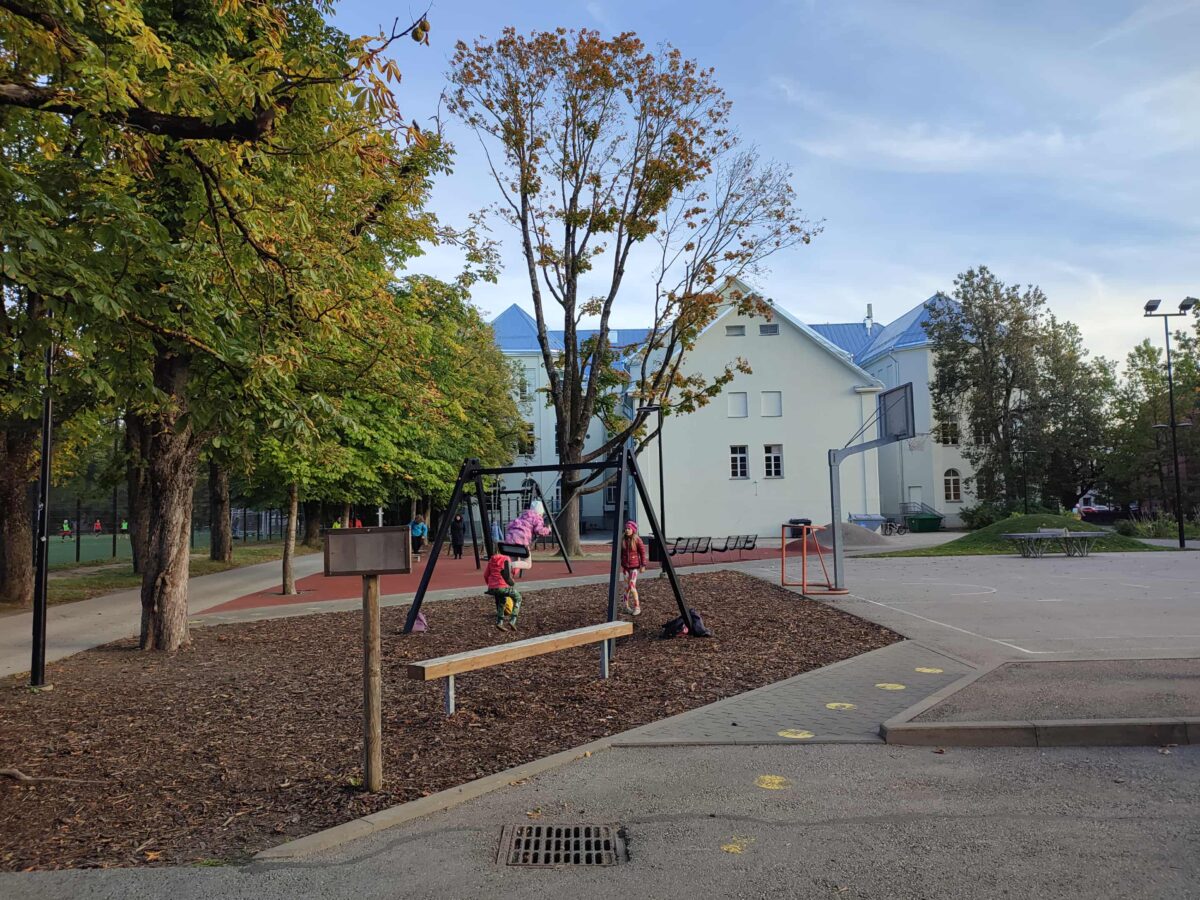
During the study visit, participants visited two schools – Tartu Forseliuse Kool and Puhja Kool. The well-organised, open school environments, average class sizes of around 24 students, and the active use of community spaces all reflected the fact that physical activity and an active lifestyle are integral parts of school culture.
In both schools, the “play leader” system was observed, which closely resembles the Hungarian Active Student Team model. Older students support their peers by organising movement-based games during breaks, under the guidance of teachers. Outdoor learning, extended lunch breaks, the use of corridors for learning purposes, and open schoolyards without fences all contribute to making movement a natural and everyday part of students’ school lives.
Inspiration for future developments in Hungary
One of the most important conclusions of the study visit was that the key strengths of the Estonian programme – strong community building through frequent face-to-face networking, methodological support for active lessons, and the prominent role of outdoor learning – align well with the philosophy of the Hungarian Active School programme.
HSSF experts returned from Estonia with numerous new ideas and valuable confirmations that can support the further development of the Active School programme in Hungary.